
Danville Former Owner Sources
Danville offers several period sources beyond the current index. The Circuit Court Clerk holds land records from 1841 forward. Deed books and indexes are back-scanned to that date. The Library of Virginia separately catalogs a 1939-1966 index run, land-tax books through 1899, and Chancery causes through 1913. Those archive series add real depth to a property search, and they sit apart from the Clerk's own online coverage boundary rather than defining it.
| Source | Years It Covers | Where Held | What It Shows |
|---|---|---|---|
| Danville Clerk land records | 1841 to present | SRA and Public Records Area | Recorded instruments and ownership transfers |
| LVA deed index reels | 1939-1966 | Library of Virginia microfilm | Alphabetized grantor and grantee leads |
| LVA land-tax books | 1851-1899 | Library of Virginia cataloged runs | Land listings across older tax periods |
| Danville Chancery Causes | 1842-1913 | Virginia Memory, scanned | Partitions, heirs, boundaries, and title disputes |
Begin with the Clerk's most recent deed. Follow its grantor name back to the prior conveyance. When the trail enters the older index series, the Library of Virginia guide pinpoints the right reel and alphabet range for that deed record. Land-tax books cover quiet stretches between instruments, and a Chancery file can explain why a tract was divided or passed among heirs.
Walking Danville’s Deed Chain Backward
Chain research moves one conveyance at a time. Start with the latest grantee. Read the deed to learn who granted it. Then search that grantor as an earlier grantee. Compare legal descriptions at each step, since one person may hold several lots and a single tract can be split or recombined; keep deed dates and recording references in a timeline so gaps stay visible.
- Find the latest deed and note the grantee, grantor, recording date, and legal description.
- Search the named grantor as a grantee to locate that party’s earlier acquisition.
- Match the tract description, not just a similar owner name or street address.
- Repeat until the target era, then switch to the appropriate archival index, tax run, or court file.
- Grantor
- The party named as transferring the interest.
- Grantee
- The party named as receiving the interest.
- Chain of title
- The ordered sequence of recorded transfers for a tract.
- Legal description
- The land text used to tell one parcel from another.
Danville’s Ownership Record Depth
The Clerk's land-record run starts in 1841. City budget reports confirm that deed books and indexes are back-scanned to that year. The Library of Virginia's 1939-1966 index reels are simply a separate finding aid. They don't limit the Clerk's broader digitized series. No courthouse fire or land-record loss interrupts the run.
Lawful use. Use Danville former-owner records for house history, estate research, or property diligence. Do not use an old name or address to track or harass a living person; a deed search is also not a substitute for a professional title examination.
Danville’s 1841 Digital Deed Run
Danville's Clerk reports land records from 1841 forward. City budget material says back-scanning of deed books and indexes to that year is complete, with documents viewable in the office or remotely through Virginia SRA, which gives a deed chain a deep starting point. Remote images stay under the Clerk's own access terms.
The Clerk's page describes the Public Records Area for on-site reference and research. Copies run $0.50 per page. Certification adds $2 per instrument. If an image is missing, ask about a counter copy. The screen is not the whole record set.
The Clerk's local land-record page shows the 1841 coverage and the public access route.
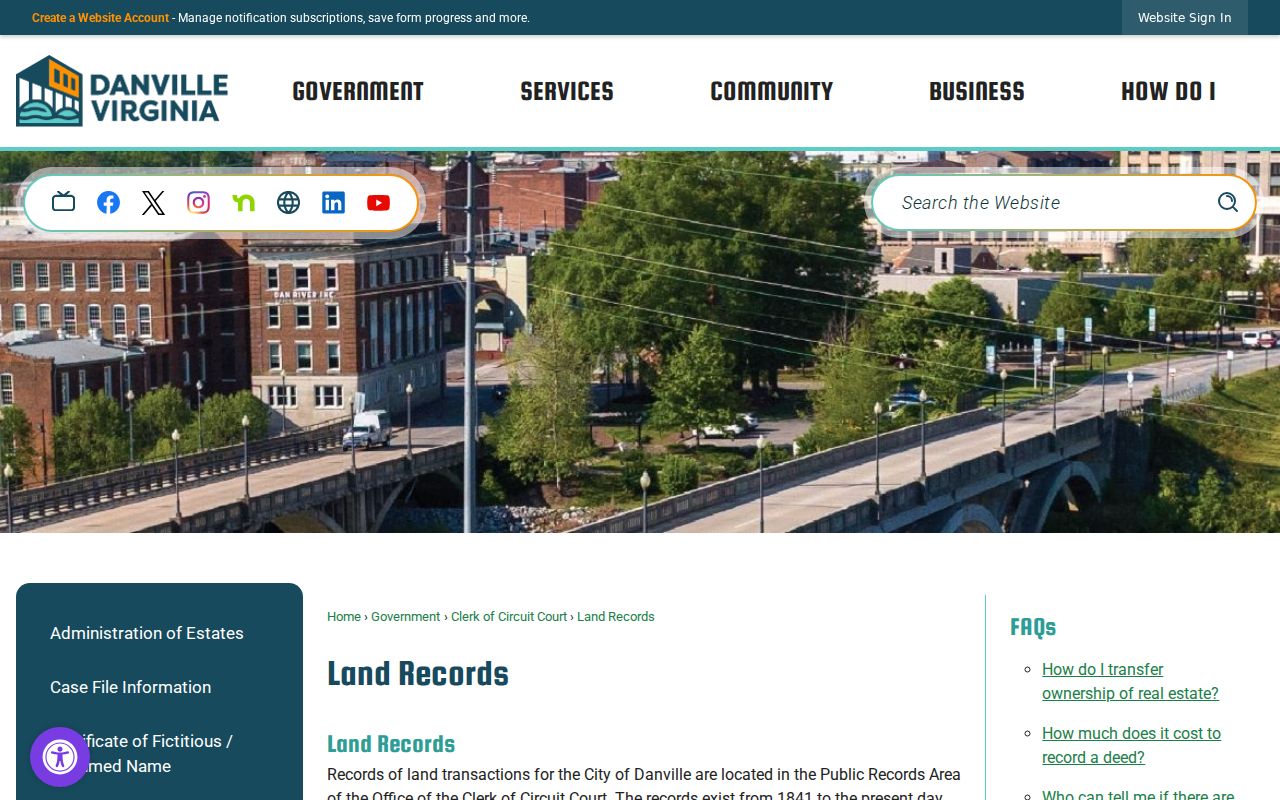
The Clerk's record run anchors a modern Danville chain.
Danville Microfilm and Land Tax Books
The Library of Virginia lists Danville grantor and grantee deed indexes for 1939-1966 on reels 1-8. Reel 1 opens the grantor alphabet at A-B. Reels 2-4 finish grantors. Reels 5-8 cover grantees A-Z. The guide also lists eight land-tax intervals from 1851 through 1899, and those books can surface an older name or land listing when a deed chain goes quiet.
Pick the tax-book interval closest to a deed's recorded date, then compare names and land descriptions across the entries. Tax books are not deeds, though, and cannot prove a conveyance alone. Ask the archive about reading-room access, reel loans, and reproduction terms before a visit.
The Danville microfilm finding aid lists the deed-index and land-tax series. The Library catalog maps the reels.
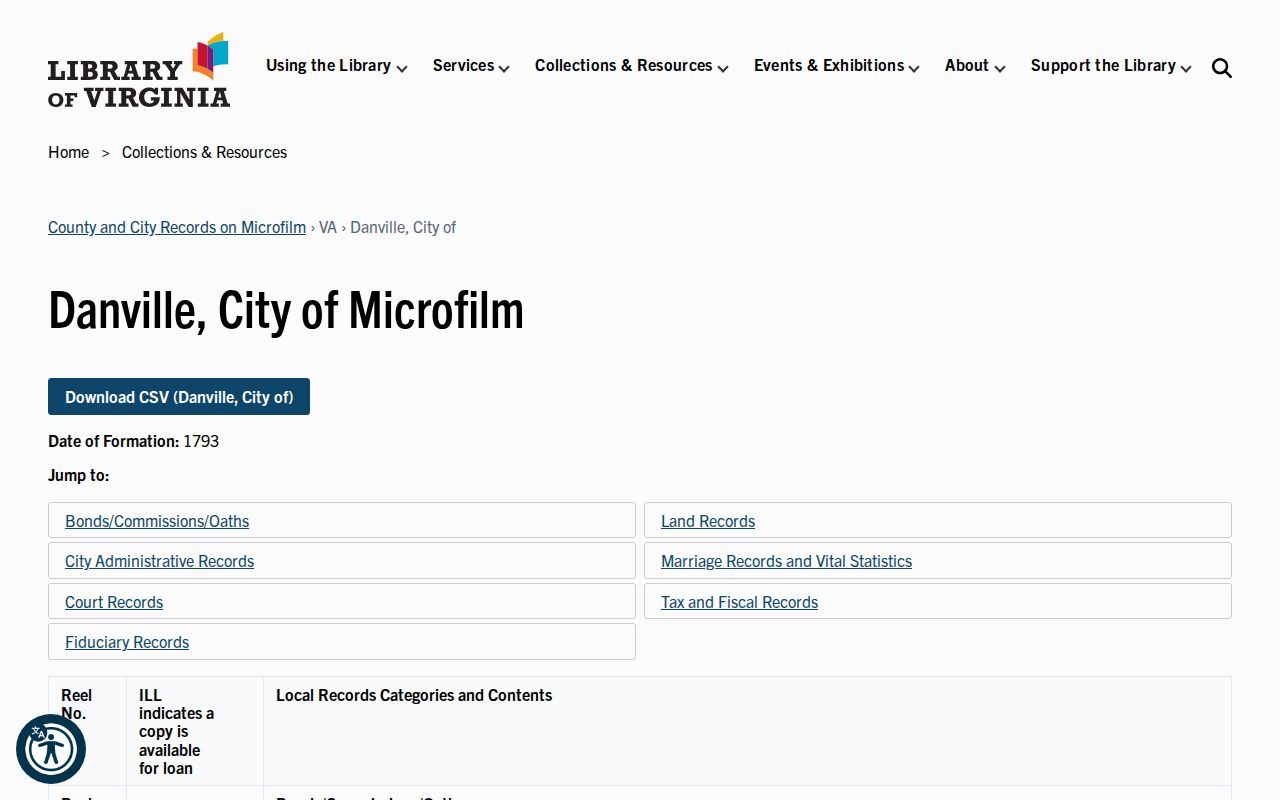
Use a reel and alphabet reference to narrow the search before requesting archive help.
Danville Chancery and Heirship
A deed chain can seem to jump. Estates, partitions, and family disputes explain many of those gaps. Virginia Memory offers scanned Danville Chancery Causes from 1842 through 1913. A case file may hold pleadings and a decree. It can also carry boundary detail, partition terms, and heir relationships that a short deed index entry never shows.
Search the case when a deed names an executor, commissioner, or family group and the next grantee is unclear. Use that information to locate the land-record instrument. Then confirm the final conveyance in the Clerk's index. Chancery adds context but never replaces the recorded deed.
The Virginia Memory Chancery index shows the Danville coverage, and the scanned case index can explain a partition or title dispute.
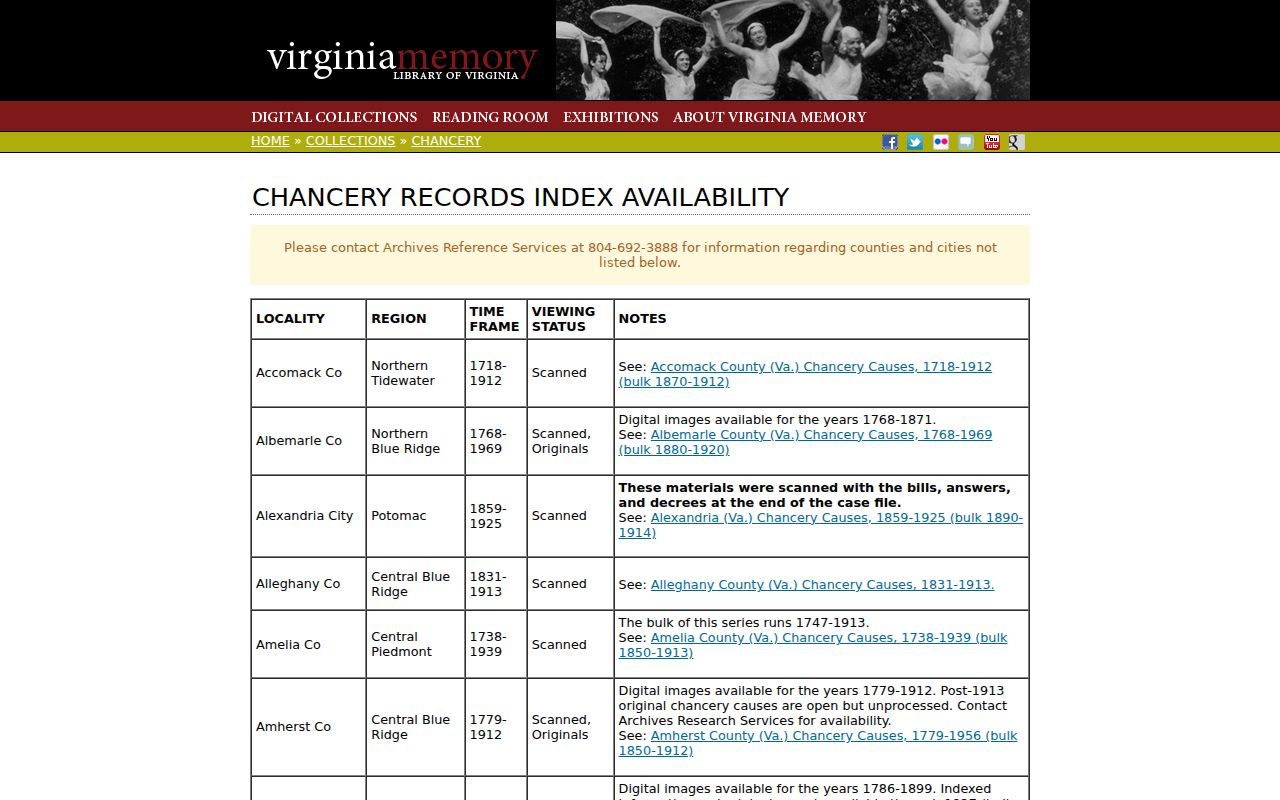
Treat an older court cause as a clue, then head back to land records for the deed itself.
Danville Probate and Recorded Transfers
A will and a deed do different jobs in Danville ownership history. The will states an intent to pass land on. The deed that follows is what actually moves title. It is often signed by an executor or administrator. Danville's Circuit Court Clerk keeps the probate file. Death certificates, though, sit in state vital records. Age and eligibility rules restrict access there. A certificate request will not shortcut the parcel chain of conveyance. Search land records for the estate name, the representative, and the grantee. When a court order or partition drove the transfer, pull the related case too. Keep the legal description beside each name. That prevents matching an heir to the wrong family tract.
Danville Deed and Lien Context
People are only part of the chain. Between Danville transfers, deed books pick up deeds of trust, assignments, releases, judgments, easements, and plats. Liens appear in those books as well. A recorded release or satisfaction signals that a claim was settled. Still, a title professional may need to confirm it matches the original instrument. It must also cover the same property. For deed mechanics and copy access, turn to the separate Danville deed-records page. The former-owner search stays on people and dates. Who received the parcel, and who conveyed it next? Which older index series fills a gap? These remain the core questions.
Danville Old Address Limits
Older instruments rarely carry a modern street number. They lean on lot, block, subdivision, deed-book and page, or metes-and-bounds language instead. Danville sources offer no sample directory entry and no full address-renumbering history. So treat a current address with care. Inferring an old occupant from it invites errors. Historic street names might not match modern map labels. Ground the search in the deed's legal description, its plat reference, and the tax-book period. Ask the Library of Virginia or the local library. What newspaper and directory material do they actually hold? Settle that question before planning any address-to-person search in Danville.
Separate Danville’s Archive Clues from Title Proof
Library of Virginia materials work as finding aids. They are not a substitute for the local recorded instrument. Its Danville guide lists grantor and grantee deed indexes on reels 1 through 8 covering 1939-1966, plus eight land-tax intervals from 1851 to 1899. A land-tax entry can pin down a name or a land listing in an older period. What it cannot do is establish the chain of conveyance or the boundaries of a present parcel. That proof lives in the recorded deeds. Virginia Memory holds Danville Chancery Causes from 1842 to 1913. A single cause may explain a partition, an estate dispute, an heirship question, or a boundary fight that pushed land through court. Take the names, dates, and land descriptions from the case. Use them to spot a likely deed or court order. Then check the Clerk's recorded land series for the instrument that changed the title record. For a modern chain reaching into the nineteenth century, the Clerk reports land records from 1841 to the present. Its deed books and indexes are back-scanned to 1841. The microfilm and court series simply add context for particular eras. Keep each source's date range separate. Otherwise an archival index gap can be mistaken for a break in the underlying land-record coverage.