
Danville Deed Record Types
Deeds and their cousins all pass through the Danville Circuit Court Clerk. The clerk serves as the city's recorder of land instruments. A deed itself conveys an interest in land. The paperwork around it does different jobs. Some filings secure a debt, others grant access or reshape how a parcel is described. Read the named document and any later release. Do not treat every land-record entry as a sale.
| Deed Type | What It Does | Common Use |
|---|---|---|
| Deed | Records a transfer and its parties and legal description | Sale, gift, or other conveyance |
| Executor or administrator deed | Documents a transfer by an estate representative | Estate property disposition |
| Commissioner or foreclosure deed | Records a court-related or foreclosure transfer | Confirm with the related case file |
| Deed of trust | Records a security instrument tied to a loan | Check later release or satisfaction |
| Easement, plat, lien, or release | Records access, parcel layout, claim, or discharge | Trace against the deed and map |
Danville keeps one land-record system for deeds, deeds of trust, plats, liens, easements, releases, and satisfactions. Each instrument does distinct work. A deed of trust, for instance, secures a lender rather than transferring ownership. A recorded deed entry alone does not prove that a related lien was ever satisfied. Pull the instrument itself. Check any release tied to it before drawing conclusions.
Danville Grantor-Grantee Index
For remote work, the Clerk’s land-record page points to Virginia Secure Remote Access, known as SRA, as the online route into Danville property records. Coverage runs deep. The local page reports records from 1841 to the present, and the City’s recent budget confirms that deed books and indexes were back-scanned to 1841. SRA’s screens differ from county to county, though. Expect variation in field labels, result pagination, and image controls rather than assuming a particular dropdown or a free image feature.
- Start with the latest known owner or deed reference and search that name as grantee.
- Read the grantor, legal description, recording date, and deed reference from the result or instrument.
- Search the grantor as a grantee to locate the earlier acquisition, checking alternate spellings and joint names.
- Repeat through earlier transfers, then use the Clerk or Library of Virginia when you need a reel or book reference.
- Grantor
- The party named as transferring an interest in the instrument.
- Grantee
- The party named as receiving the interest.
- Chain of title
- The sequence of recorded transfers traced from one owner to an earlier one.
- Legal description
- The land description used to match an instrument to the parcel.
Copying a Danville Deed
Virginia SRA may open the index to anyone while leaving images in local hands. The statewide court page explains that a Circuit Court Clerk can allow index-only use. The Clerk also controls which subscribers may view images. In-person research happens at the Danville Clerk’s Public Records Area, James F. Ingram Justice Center, 401 Patton Street. Hours conflict slightly across the court’s pages. One lists 9 a.m. to 4 p.m. The other allows counter access until 4:30 p.m., so confirm before traveling. The published copy charge is $0.50 per page. Certification adds $2 per instrument. Ask the Clerk what a request should carry. It might include party names, an approximate deed date, a parcel account, or a deed book and page. Staff can explain how to reach a document. They cannot interpret its legal effect or recommend a legal action.
Recorded is not the same as guaranteed. The Danville index points to recorded instruments; it is not a title opinion, and the deed alone does not establish that every claim has been resolved. Use an attorney or title professional for legal interpretation.
Danville Remote Image Access
SRA gathers land records from Circuit Court Clerks across Virginia. Remote use is far from uniform. One office may enable a free index. That same office may restrict images to approved subscribers under a fee agreement. Danville’s page directs users to contact the Clerk about remote access. It makes no promise that every image opens free. The Danville land-record page carries the Clerk’s current contact route. It also describes the public counter. The statewide portal lays out the remote access model for land records statewide. Together they explain where the state system ends and local control begins.
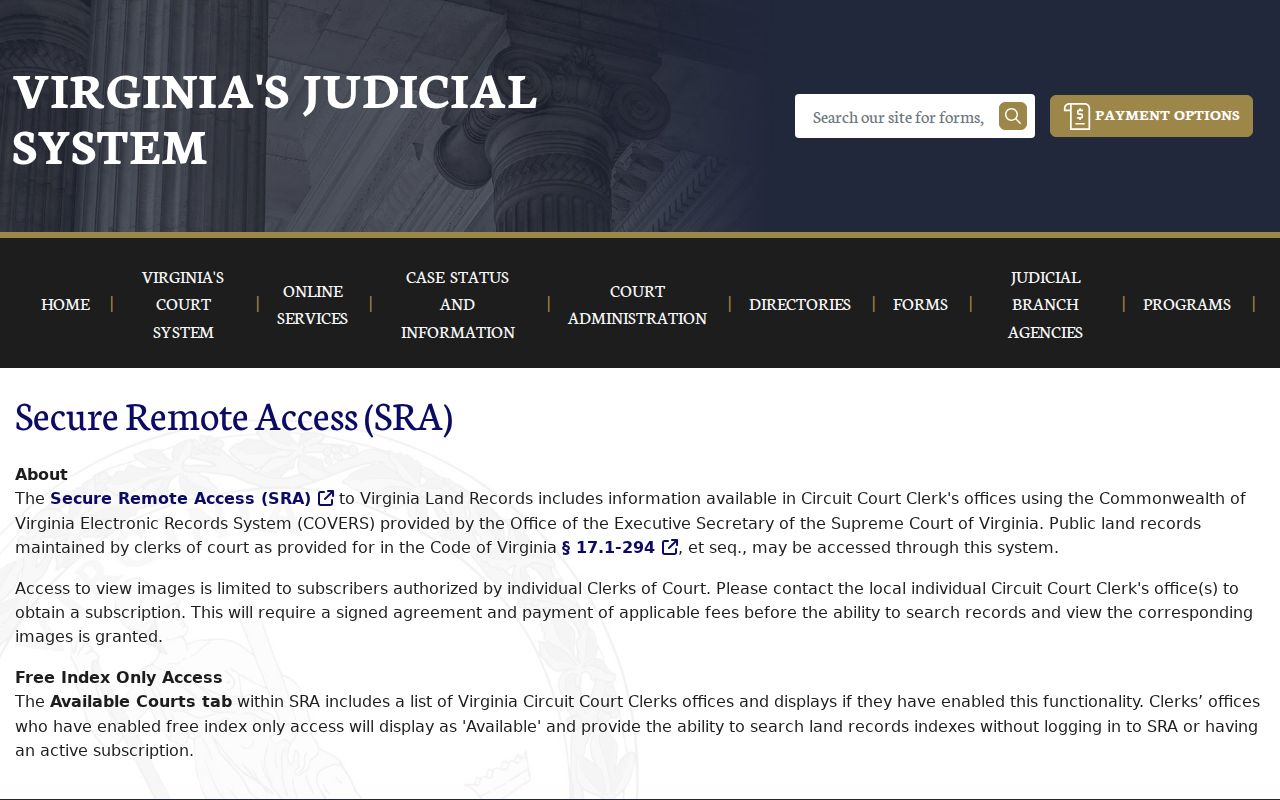
Ask about local subscriber terms when an index result appears without an image.
Danville Land Records at the Clerk
The Clerk's office records deeds, deeds of trust, and mortgages. Financing statements, judgments, wills and probate items, marriage licenses, military discharges, plats, liens, easements, releases, and satisfactions are recorded there too. Some categories carry separate privacy or access rules. A military discharge image may not be open to the same use as an ordinary deed.
Ask about page charges for a plain research copy. If a copy supports an official matter, ask whether certification is required and how it is charged. The published figure is $0.50 per page. Certification adds $2 per instrument. Keep in mind that one recorded deed is not a full search of every instrument affecting the tract.
The Clerk's page lists land-record coverage and copy fees. The Clerk's page also shows where public research and copies are handled.
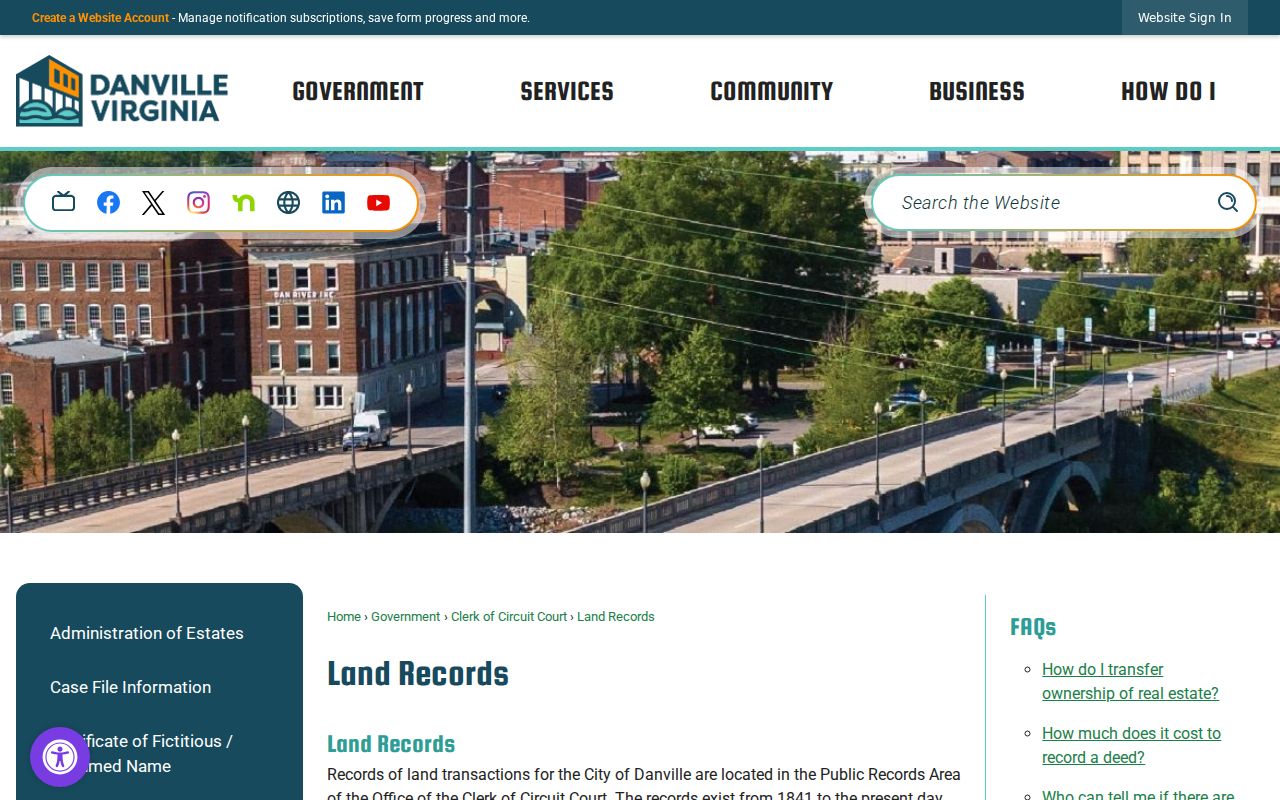
Mail your request with everything in hand: party names, parcel account, legal description, and date range.
Danville’s Older Index Series
Danville's older deed records reach back well into the nineteenth century. The Library of Virginia Danville collection page describes a grantor and grantee index series. It covers 1939 through 1966 on eight reels. Reel 1 opens the grantor index with surnames A and B. Reels 2 through 4 carry grantors C through Z. Reels 5 through 8 hold the full grantee run from A to Z. Anyone tracing a deed or a parcel's owner of record before modern indexing will find that microfilm set a practical route into the archive.
The back-scan story goes further, though. Danville's Clerk has reported deed records reaching to 1841. The mid-century reels are therefore a helpful shortcut, not the outer edge of what exists.
Before requesting anything, identify the reel and alphabet range in the catalog. The archive guide also lists land tax books and court series for Danville. Read the loan notes and current reproduction rules first. An out-of-office copy of a deed index may carry limits.
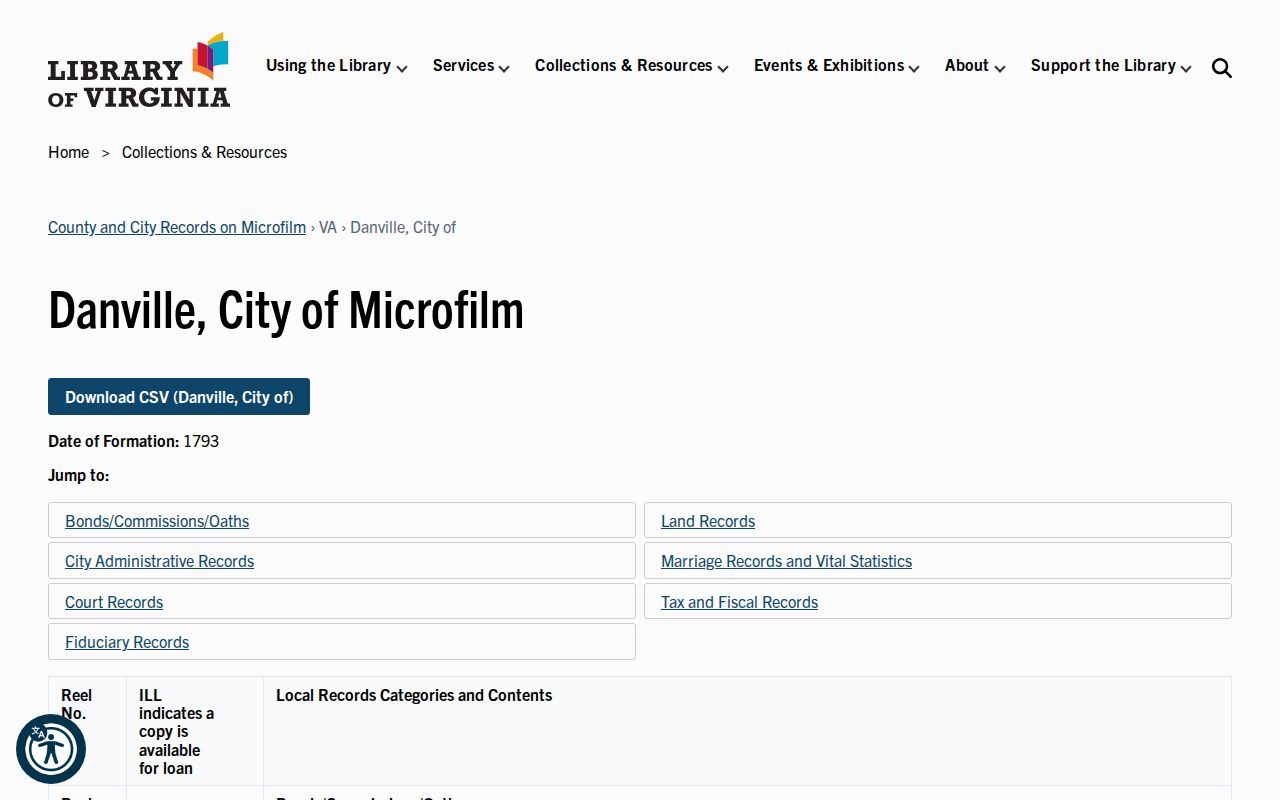
Let the reels answer a date-specific index question, then confirm the document itself in the Clerk’s record system.
Chancery and Estate Transfers
Not every deed comes from a sale. Estates, partitions, foreclosures, and court orders all transfer land too. Danville Circuit Court handles wills and probate. Its land records include executor, administrator, trustee, and commissioner instruments. A transfer name may break the family or ownership story you expect. The related fiduciary record often explains it.
Virginia Memory offers scanned Danville Chancery Causes from 1842 through 1913. A chancery file may hold bills, answers, decrees, heir relationships, partition terms, or boundary claims. Those papers explain why a parcel was split or moved. They add context to the chain. They do not replace the recorded deed.
Deed trails sometimes end in equity court. The Virginia Memory Chancery index is the fallback for those cases. Its papers can tie a named family member to a specific property dispute or division.
Danville Deed Search Limits
Skip any assumption about exact fields. The live local index publishes no inventory of its dropdown names, sorting, export options, or address search, so treat it as a name-first tool. An ambiguous name search has a fix. Take the account ID and legal description from GIS to the Clerk, and ask how best to identify the instrument.
Search both sides of any transfer. Check the related records too. Releases, liens, easements, plats, and court cases can all change the picture. Absent online, the counter still works. A specific Virginia FOIA request to the right public office is another route, and the Library of Virginia holds older material. The Clerk can explain procedure, but cannot say whether a deed is valid or what legal step to take.
Read a Danville Deed Reference in Context
An index entry is just a pointer. Copy everything it gives you. That means the parties' names exactly as shown. Include the record date, any instrument or book-and-page reference, and the legal description. The live index publishes no field inventory, so trust only what a result actually displays. A GIS owner name can start the search. It never replaces the recorded reference.
Read the instrument itself to see the capacity in which each signer acted. A person may convey as an individual, trustee, executor, administrator, or company officer. The role explains a name that differs from the assessment roll. Match land, not just people. Compare the land description with the parcel account and any plat before concluding anything.
One later deed does not settle every interest. A deed of trust, mortgage, easement, lien, release, or satisfaction may be recorded separately. Each one is its own instrument. The question may be an encumbrance or an access right. In that case, search related parties and later recordings. A complete title examination takes professional review of the chain and all applicable claims. One deed image is only one source document.
For procedure, Danville's Clerk keeps the local land-record series from 1841 to the present. The Clerk reports that deed books and indexes have been back-scanned to 1841. The Library of Virginia's microfilm and Chancery materials serve as separate finding aids. They add older context. Use the Clerk for a current instrument copy. Try the archive catalog when a historical index route fits better.